
Deskripsi
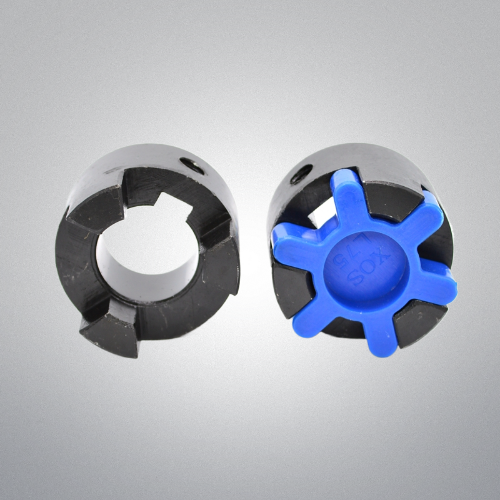
Electrostatic Precipitator Ceramic Shaft Front Universal Coupling
Model : LD75-2-7
Coupling type : Half coupling
Nominal torque : 500 Nm
Shaft hole : 65
External dimensions : 50*80 mm
Permissible speed : 1000 r/m
Material : Carbon steel
Brand : YINGLI ENVIRONMENTAL PROTECTION
The LD75-2-7 universal joint for the ceramic shaft of an electrostatic precipitator is a mechanical part used to connect two shafts (driving shaft and driven shaft) in different mechanisms, enabling them to rotate together to transmit torque. In high-speed, heavy-load power transmission, some couplings also have the functions of buffering, vibration reduction, and improving the dynamic performance of the shaft system. A coupling consists of two halves, connected to the driving shaft and driven shaft respectively. Generally, most power machines are connected to the working machine using couplings. There are many types of couplings.
According to the relative position and positional changes of the two connected shafts, they can be divided into:
① Fixed couplings. Mainly used where the two shafts require strict alignment and no relative displacement during operation. They are generally simple in structure, easy to manufacture, and the instantaneous speeds of the two shafts are the same. These mainly include flange couplings, sleeve couplings, and coupling clamps.
② Movable couplings. Mainly used where the two shafts are misaligned or have relative displacement during operation. Based on the method of displacement compensation, they can be further divided into rigid movable couplings and flexible movable couplings. Rigid movable couplings compensate for misalignment and displacement by utilizing the dynamic connection between the working parts of the coupling, which allows for movement in one or more directions. Examples include jaw couplings (allowing axial displacement), cross-groove couplings (used to connect two shafts with small parallel or angular displacements), coupling universals (used where the two shafts have a large misalignment angle or significant angular displacement during operation), gear couplings (allowing combined displacement), and chain couplings (allowing radial displacement). Flexible movable couplings (also known as flexible couplings) compensate for misalignment and displacement of the two shafts by utilizing the elastic deformation of elastic elements. These elastic elements also provide buffering and vibration damping properties. Examples include serpentine spring couplings, radial multi-layer leaf spring couplings, elastic ring pin couplings, nylon pin couplings, and rubber sleeve couplings. Some couplings are standardized. When selecting a coupling, first choose the appropriate type based on the working requirements, then calculate the torque and speed according to the shaft diameter, then find the applicable model in the relevant manual, and finally perform necessary verification calculations for certain key components.


Ulasan
Belum ada ulasan.